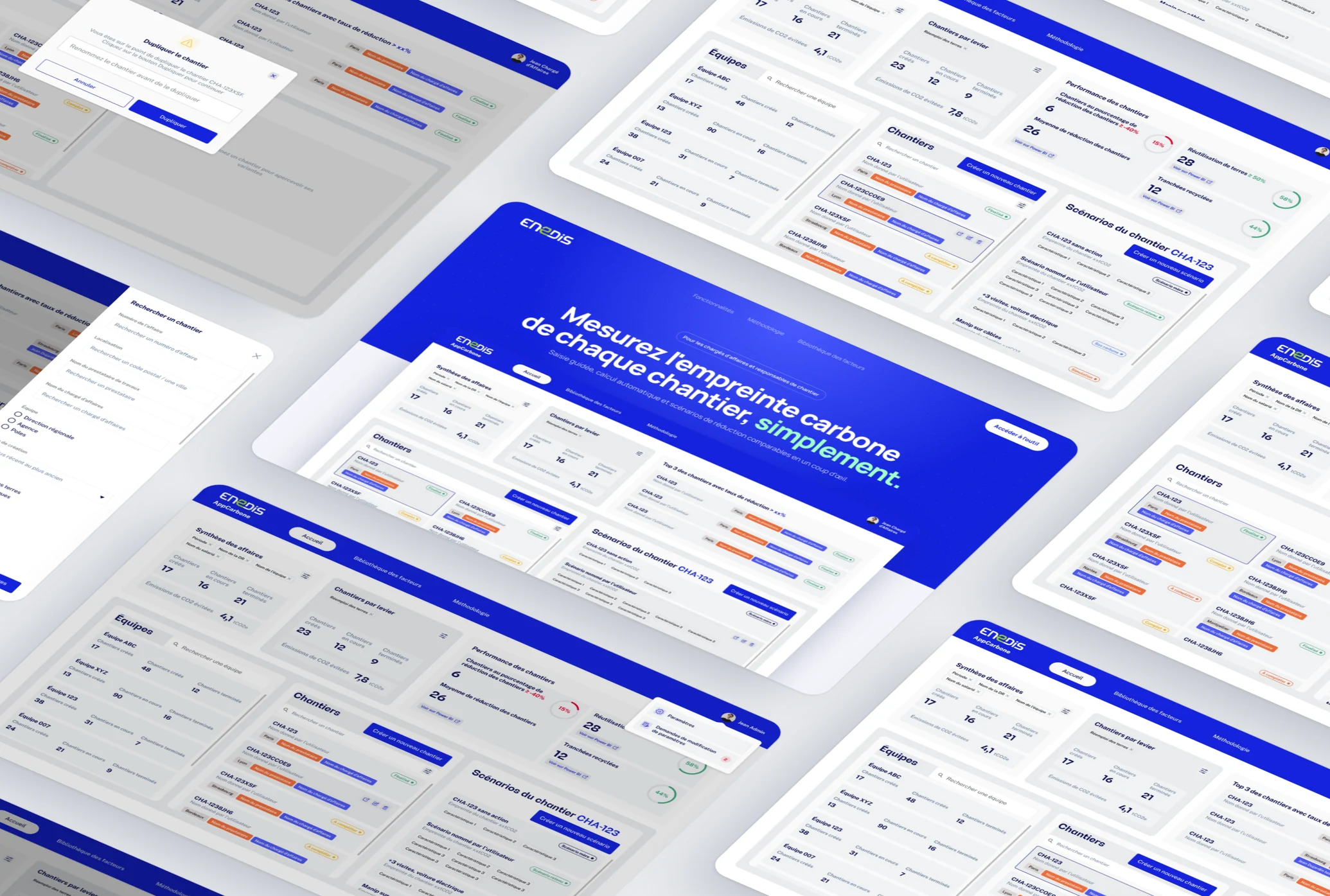
Osim
Letting any recruiter create a professional work sample with AI, to assess real skills rather than a résumé.
- Client
- Apec
- Role
- Product Designer, sole designer
- Timeline
- 3 months
- Deliverables
- Tool and landing page
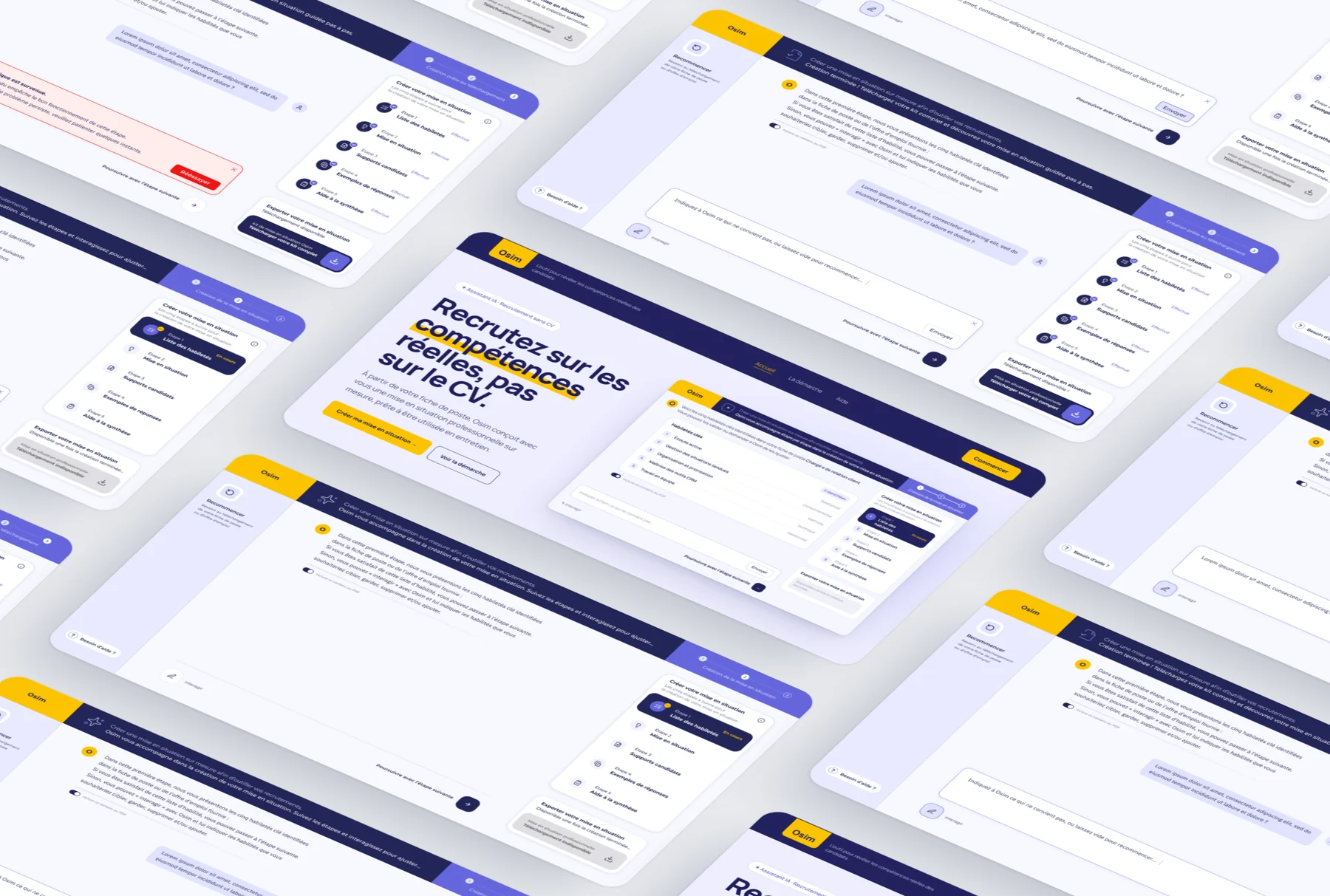
Make generative AI simple enough for a busy recruiter, and reliable enough to trust it with an interview.
A guided assistant where the AI suggests and the recruiter validates at every key step.
A complete work sample in about 10 minutes instead of several weeks. Live on apec.fr since November 2025.
A résumé shows what you claim, not what you can do.
Apec, France's reference for executive employment since 1966, supported 229,000 people and more than 26,000 companies in 2025. Through its “Reinventing recruitment” tender, it was looking for a more reliable way to assess what executives can actually do. Matrice was selected to lead the project.
A résumé measures confidence, not skill
There is a fundamental gap between the job as written and the job as actually done.
A proven method that doesn't scale
France Travail's simulation-based hiring method has proven itself since 1995, but building a single exercise takes weeks.
No tool for executives
Apec advisors support more than 230,000 executives, with no way to create work samples at that volume.
Two profiles, one shared constraint: time.
In-house recruiter
Manager or SME owner. Short on time, unsure how to formalize a skill, wary of AI.
Apec recruitment advisor
Supports executives and companies. Wants to go beyond the résumé, but has no tool to do it at scale.
“I spend hours helping executives prepare their pitch, but in the end the recruiter decides on a one-page document.”
“I don't need someone with the right keywords on their résumé. I need someone who can do the job from day one.”
“You spend twenty years building experience, and it all comes down to a résumé that does or doesn't get through a filter.”
The market has flipped
Far more candidates than openings: companies are buried in résumés, with no reliable way to spot who can really do the work.
Résumés don't just mismeasure: they exclude
Background, school, name: everything is visible. Actual skills stay invisible.
Advisors want to go further
They understand the problem better than anyone, but without a tool they can't do it for 230,000 candidates a year.
From job description to documents, in 4 steps.
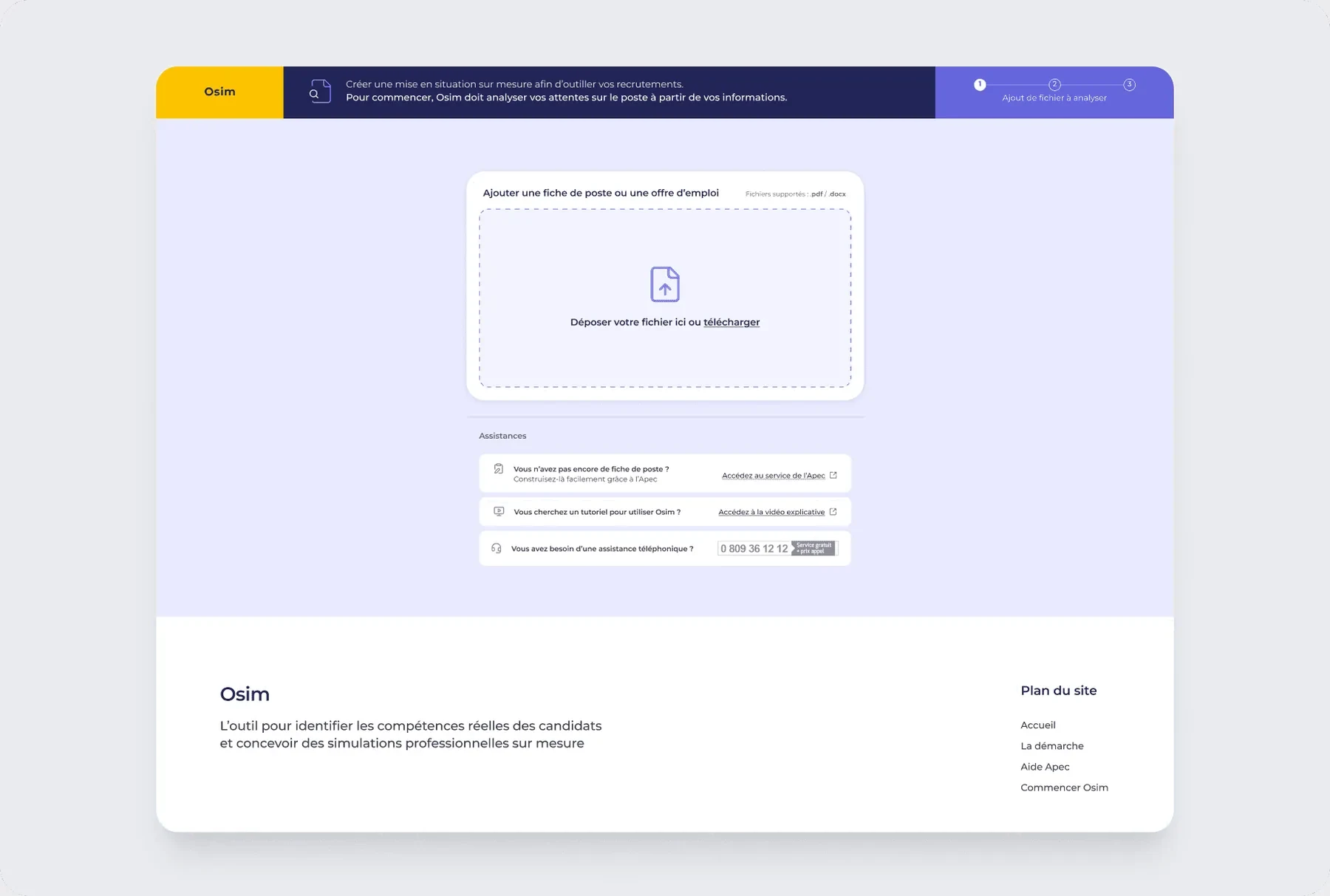
- Recruiter
- Drops in a job description or describes the need.
- AI
- Extracts the context of the role.
- Design choice
- A drop zone and free text input, with suggestions to get started.
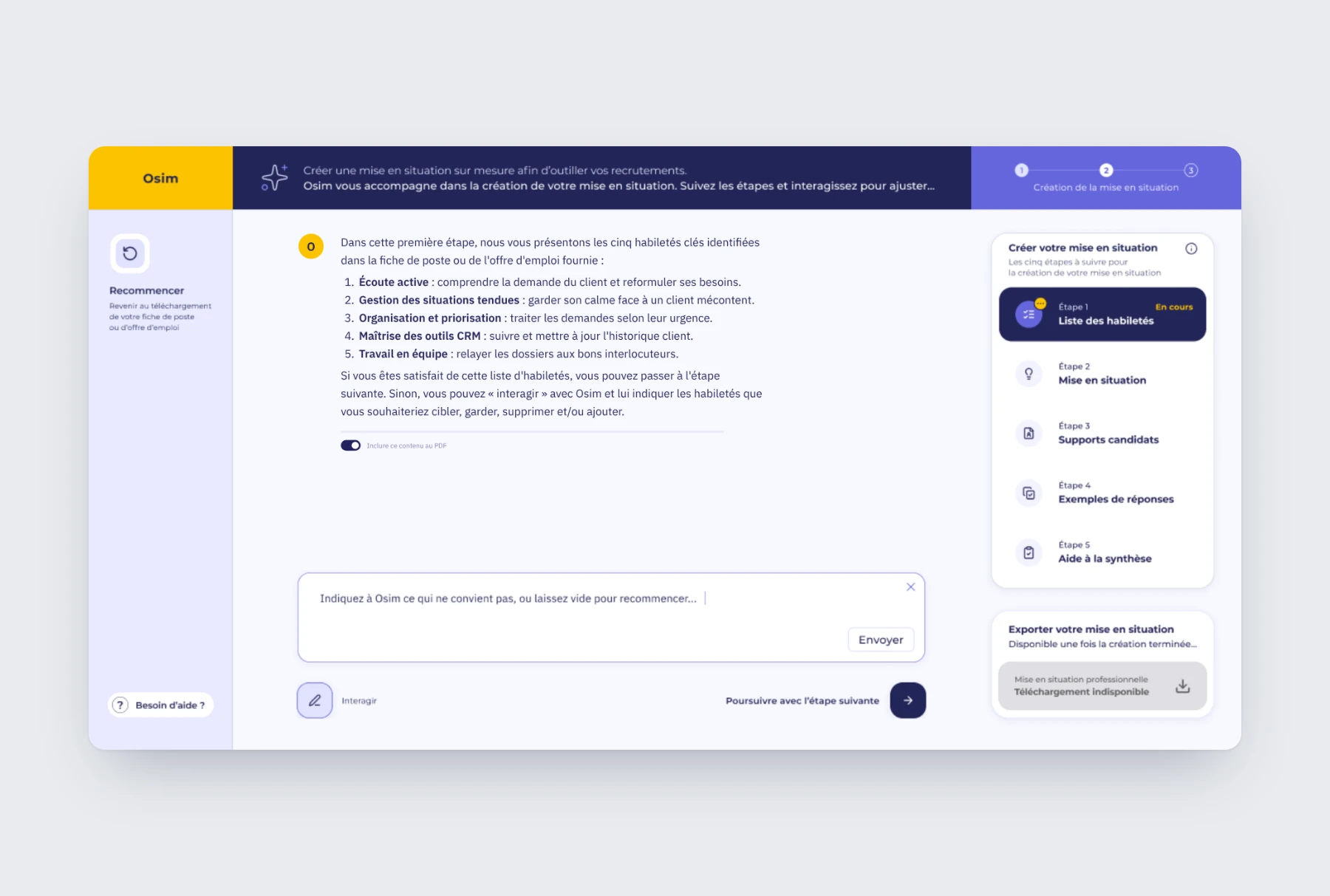
- Recruiter
- Validates, removes or adds the skills to assess.
- AI
- Suggests the key skills for the role.
- Design choice
- Skills are an editable suggestion, never a fixed result.
- Recruiter
- Reviews and refines the scenarios with the assistant.
- AI
- Generates work samples tailored to the role.
- Design choice
- A progress column shows what has been generated and what remains.
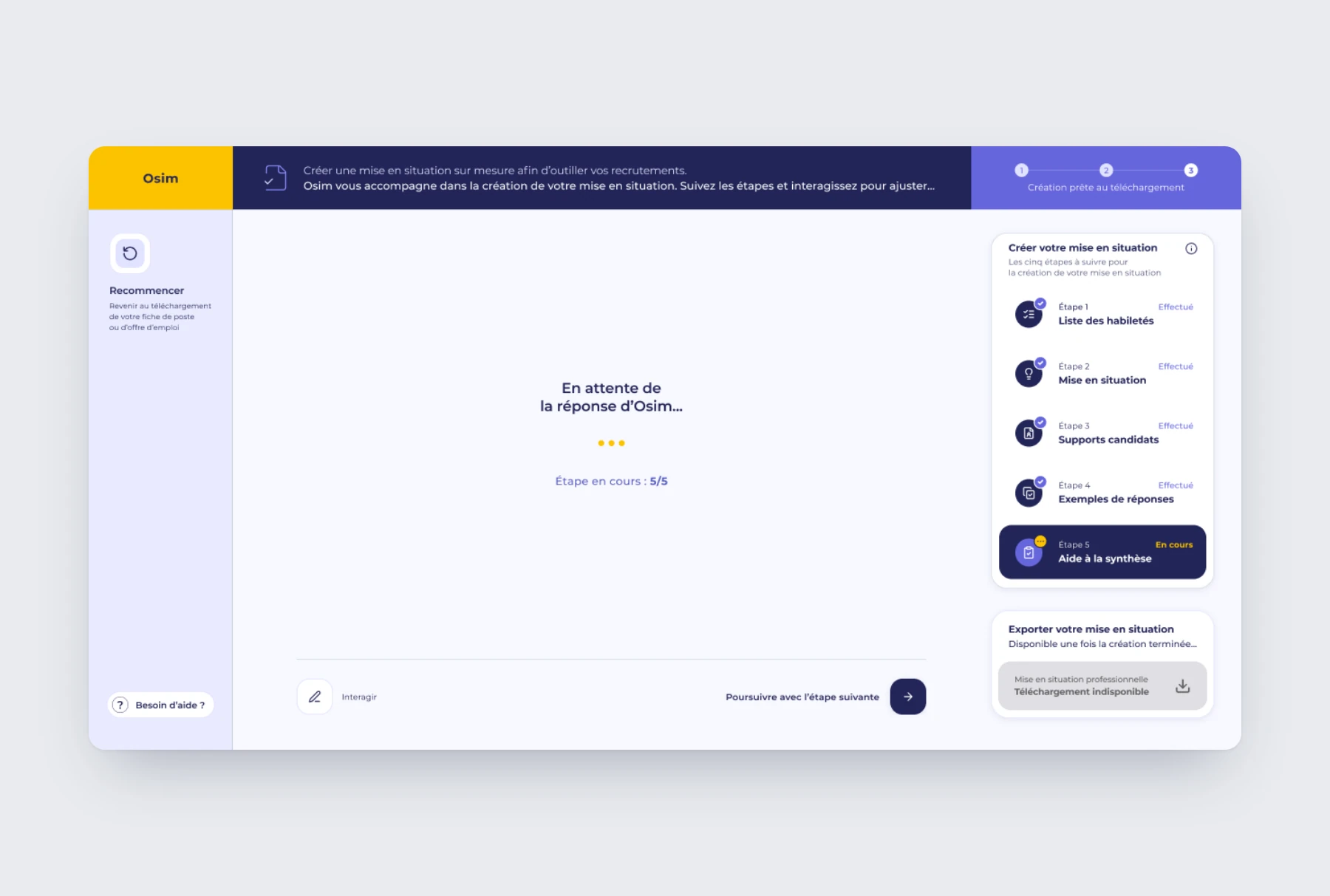
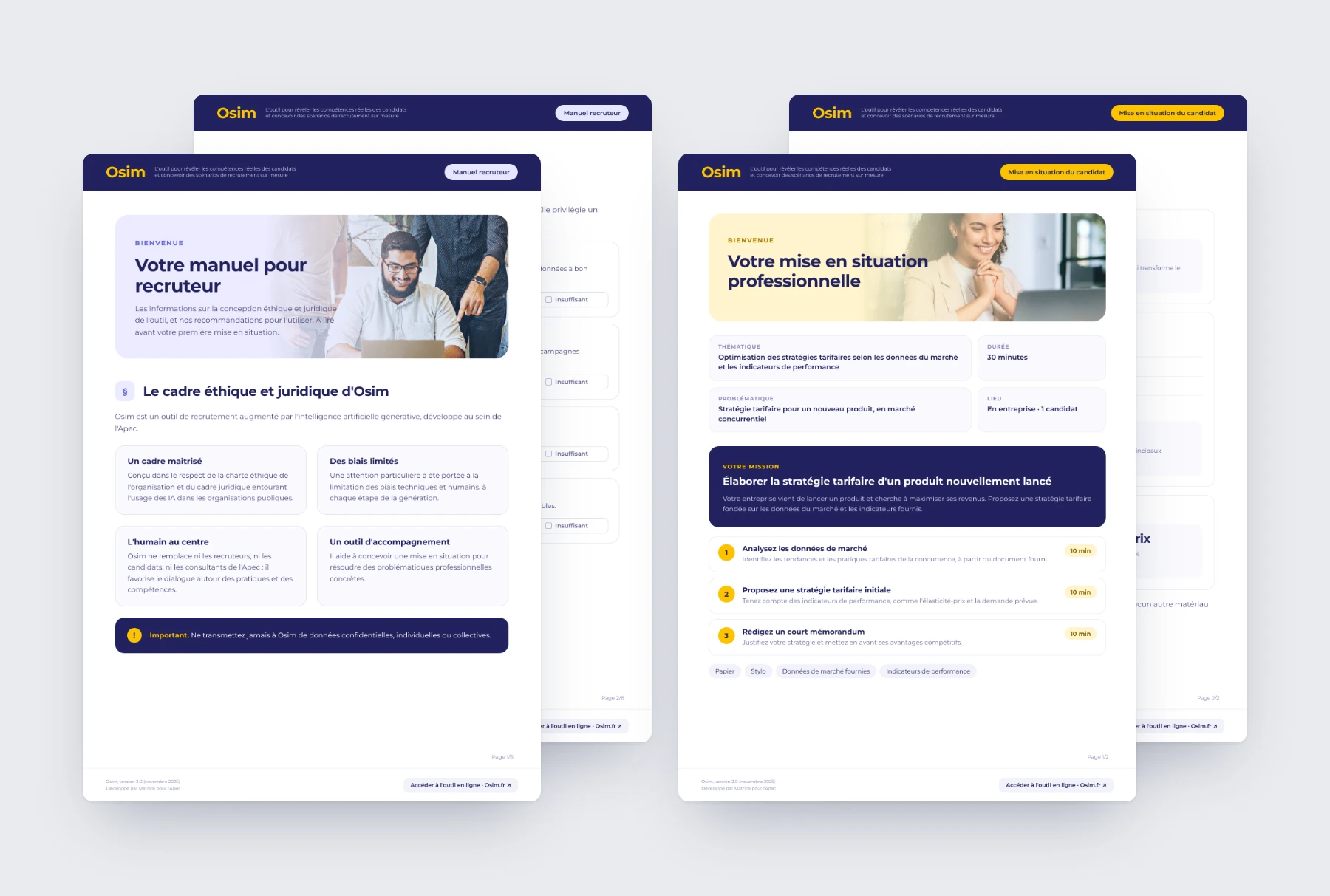
- Recruiter
- Downloads the documents and prepares the interview.
- AI
- Formats the candidate and recruiter documents.
- Design choice
- Two separate exports: the candidate never sees the expected answers.
The AI suggests, the recruiter decides.
What if generative AI could build a work sample from a job description, in minutes rather than weeks?
Defining the AI's behavior
The system prompt, designed as a design deliverable.
- Role
- Co-creator of work samples, guiding the advisor step by step.
- Tone
- Clear, structured, non-technical: written for recruiters, not engineers.
- Constraints
- Stay faithful to the job description, never invent a skill, deliver a result usable as is.
- Format
- A structured deliverable per step: skills, scenario, assessment grid, candidate guide.
Keeping the recruiter in control
Three principles applied to every screen.
Nothing is generated before the recruiter has validated the skills.
The current step and remaining deliverables are always visible.
Warnings and errors are designed screens, always with a way out.
Designing every state
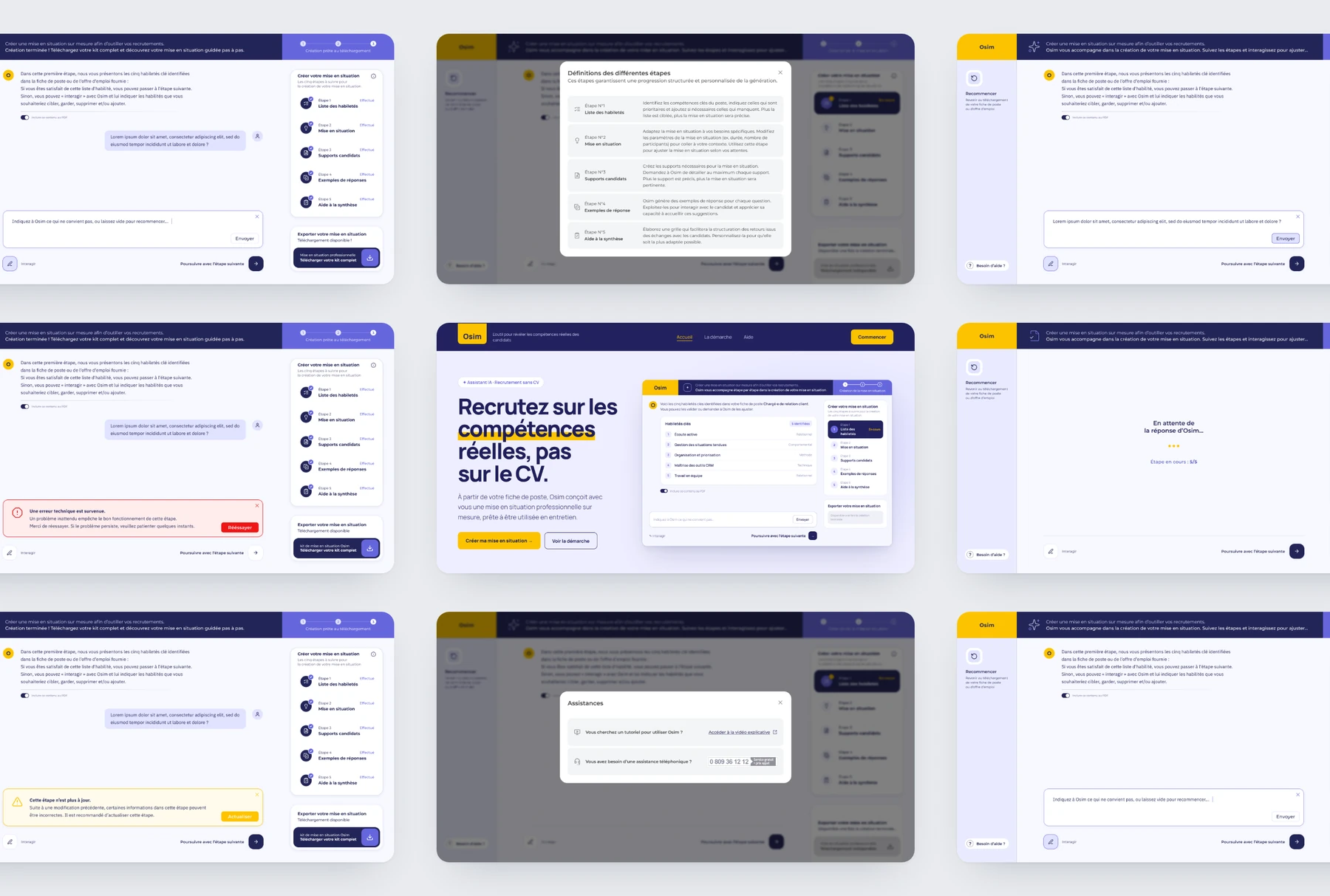
The same Osim message, in normal, warning and error states.
In this first step, we present the five key skills identified in the job description or job offer you provided. If you're happy with this list, you can move on to the next step. Otherwise, you can “interact” with Osim and tell it which skills to target, keep, remove or add.
Following an earlier change, some information in this step may be incorrect. We recommend refreshing this step.
An unexpected problem is preventing this step from working. Please try again. If the problem persists, wait a few moments.
The trade-offs that matter.
4 design decisions, and what settled them
For each decision: the chosen solution, the alternative ruled out, and the reason.
A guided conversational assistant
Validate before generating
Two separate exports
GPT-5.4 as the engine
The tool and its landing page.
What changes for recruiters.
Live on apec.fr since November 2025.
“Three candidates, all excellent in interviews. The work sample made the difference: we saw how each one listened, handled objections and held up against a difficult client. For the first time, we didn't pick the best speech, but the best performance.”
What I take away.
My first AI product
Designing how an AI system fits into a product, not just using AI to design, opened a new direction for me.
The prompt is a design deliverable
On an AI product, you don't only design screens, you design behavior. Writing the system prompt was a design decision in its own right.
Shipping under pressure
A name change and a full redesign mid-project taught me to prioritize fast and cut what doesn't matter.